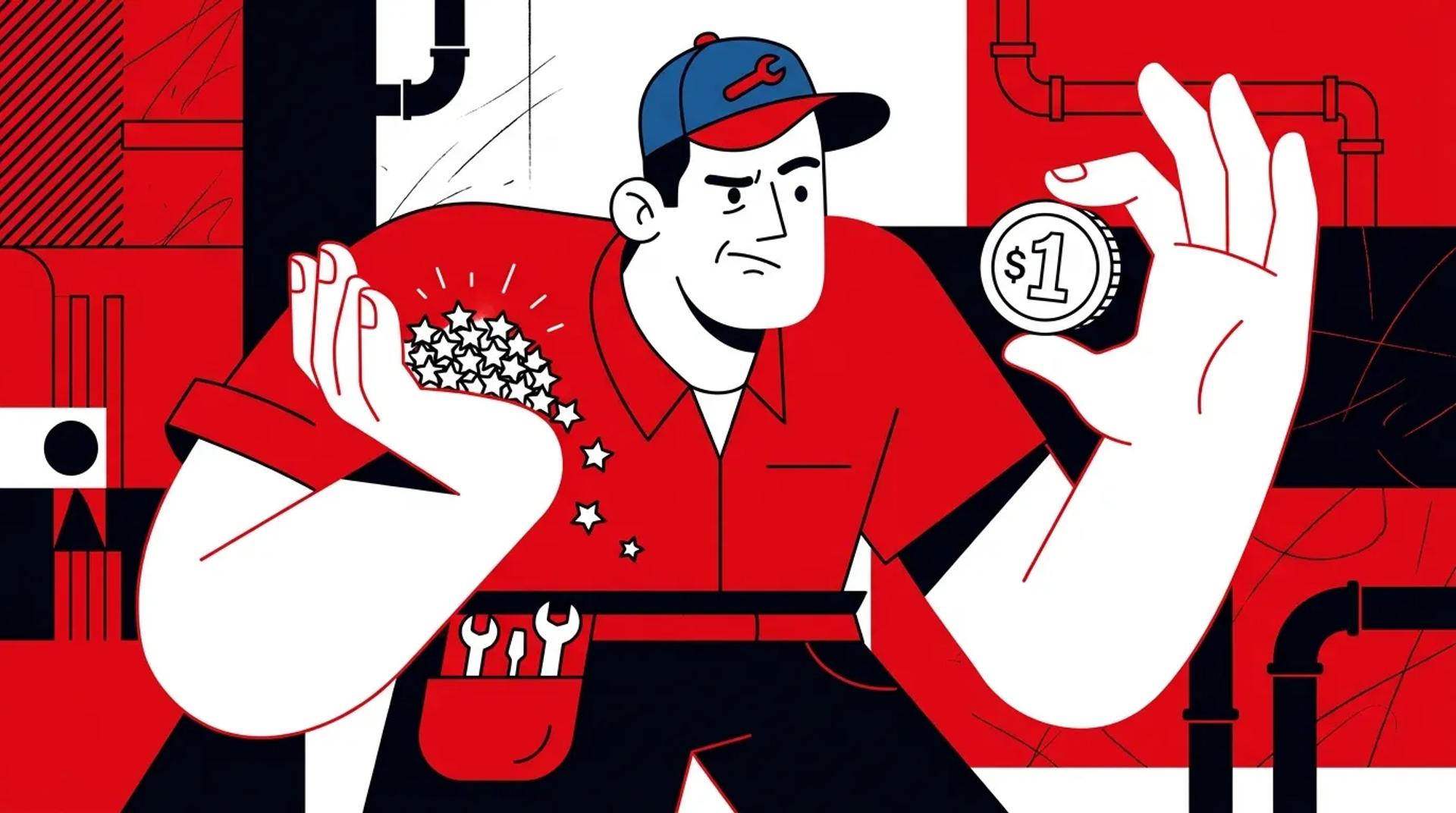

Yelp leads are different from every other directory in the home services space. Yelp is not an aggregator. It is not a lead marketplace. It is a consumer review platform where people go to research businesses they are already considering. That distinction changes everything about how leads behave, what drives conversion, and whether the platform is worth your budget.
The businesses that do well on Yelp have strong profiles, consistent five-star reviews, and fast response times. The businesses that fail on Yelp treat it like any other lead source and ignore the factors that actually drive consumer behavior on the platform. There is very little middle ground.
We have managed Yelp Ads management and organic Yelp strategies for local service businesses across dozens of verticals. Here is the honest breakdown of where Yelp works, where it does not, and how to evaluate fit for your business.
Where Yelp fits in a local acquisition mix
Yelp occupies a unique position. Consumers use Yelp to validate decisions, not to browse randomly. A homeowner who finds you on Yelp has already decided they need a service provider. They are now deciding which one to hire. That means Yelp leads carry higher intent than most directory leads.
Yelp generates leads through two channels: organic (your free business listing) and paid (Yelp Ads). Organic leads come from consumers who find your listing through Yelp search or Google search results that surface Yelp pages. Paid leads come from Yelp’s advertising platform, which places your business above competitors in relevant searches.
Yelp vs. other lead sources
| Factor | Yelp | Lead Aggregators | Google Ads/LSA |
|---|---|---|---|
| Consumer intent | High. Researching who to hire | Medium. Submitted a form | High. Actively searching |
| Trust signals | Reviews are central | None. Consumer does not see your profile | Some via reviews (LSA) |
| Lead exclusivity | Mostly exclusive (direct call or message) | Often shared with 3-5 pros | Click-based, not shared |
| Profile control | High. Photos, description, reviews | Low. Limited profile presence | Moderate. Ad copy and landing page |
| Cost structure | Monthly ad spend + CPC | Pay per lead | CPC or pay per lead (LSA) |
| Best for | Service businesses with strong reviews | High-ticket categories with fast follow-up | Broad reach, high intent |
The review-driven nature of Yelp means your profile is your most important asset. A business with 150 reviews averaging 4.8 stars will generate organic leads without spending a dollar on ads. A business with 12 reviews averaging 3.5 stars will struggle even with a large ad budget.
How Yelp lead quality varies by category
Not all service categories perform equally on Yelp. The platform skews toward services where consumers care deeply about reviews and trust signals. Categories where the decision is emotionally driven or involves someone entering your home tend to perform well.
Strong Yelp categories:
- Restaurants and food. Yelp’s core strength, though not relevant to home services.
- Home cleaning. Consumers want to trust the person entering their home. Reviews are critical.
- Plumbing and HVAC. Urgent needs with high consequences for choosing wrong. Consumers check reviews.
- Auto repair. Trust-sensitive. Consumers read reviews carefully before committing.
- Dental, medical, legal. High-trust categories where reviews are a primary decision factor.
Weaker Yelp categories:
- Roofing and siding. Consumers use aggregators or referrals more than Yelp for large projects.
- Landscaping. Reviews matter less. Price and availability drive decisions.
- General handyman. Lower ticket sizes make ad spend harder to justify.
Yelp performance by business profile strength
| Profile Strength | Organic Lead Volume | Yelp Ads ROI | Recommended Strategy |
|---|---|---|---|
| 150+ reviews, 4.5+ stars | High | Strong | Invest in Yelp Ads to amplify organic strength |
| 50-150 reviews, 4.0+ stars | Moderate | Moderate | Run Yelp Ads at low budget, focus on review generation |
| Under 50 reviews, 4.0+ stars | Low | Risky | Prioritize review generation before ad spend |
| Any review count, under 4.0 stars | Very low | Poor | Fix service quality and review issues first |
The Yelp Ads question: when to spend
Yelp Ads management is where most businesses get confused. Yelp’s sales team is aggressive, and they will push you to spend regardless of whether your profile is ready for it. The truth is that Yelp Ads can deliver strong Yelp ROI, but only under specific conditions.
When Yelp Ads make sense:
- You have 50+ reviews with a 4.5+ average rating
- Your category has meaningful Yelp search volume in your market
- You have fast response systems (under 5 minutes for calls, under 30 minutes for messages)
- You can track leads to booked jobs and calculate cost per acquisition
When Yelp Ads are a waste:
- You have fewer than 30 reviews
- Your rating is below 4.0 stars
- You are in a category with low Yelp search volume
- You cannot track leads back to revenue
The budget trap. Yelp Ads use a CPC model where you set a daily or monthly budget. Yelp recommends budget levels that are optimized for Yelp’s revenue, not yours. Start with the minimum viable budget, track results for 60 days, and scale based on cost per booked job. Do not let a Yelp sales rep set your budget for you.
Measuring Yelp ROI accurately
Tracking Yelp ROI requires connecting Yelp activity to booked revenue. Yelp provides some analytics (profile views, calls, messages, direction requests), but those are vanity metrics. You need to go deeper.
The tracking framework:
- Use call tracking on your Yelp listing. Assign a dedicated tracking number to your Yelp profile. This captures every call from Yelp, both organic and paid.
- Log every Yelp message in your CRM. Messages through the Yelp platform should be tagged as source: Yelp and tracked to a disposition.
- Calculate cost per booked job. Total Yelp ad spend divided by total booked jobs from Yelp-sourced leads. Include organic leads in a separate calculation to understand the true value of your profile investment.
- Separate organic from paid. Your organic leads are “free” (no ad cost), but they are the result of your investment in review generation, profile optimization, and service quality. Understanding the split helps you make better decisions about ad spend.
Yelp metrics that matter
| Metric | What It Tells You | Target |
|---|---|---|
| Cost per booked job (paid) | Ad spend efficiency | Under 10% of avg ticket |
| Call answer rate | Operational readiness | 90%+ |
| Message response time | Engagement speed | Under 30 minutes |
| Review velocity | Profile momentum | 4+ new reviews per month |
| Organic lead volume | Profile strength | Growing quarter over quarter |
Operational factors that make or break Yelp
Yelp penalizes businesses that respond slowly and rewards those that engage quickly. The platform’s algorithm and consumer behavior both favor fast, professional responses.
Answer every call. Yelp shows consumers whether you typically answer calls. A low answer rate discourages consumers from calling. Route Yelp calls to a dedicated line with live answering during business hours and an after-hours service on evenings and weekends.
Respond to messages within 30 minutes. Yelp displays your average response time on your profile. A “responds in about 10 minutes” badge builds trust. A “responds in about 2 days” badge kills conversions. If you cannot monitor Yelp messages consistently, assign someone specifically to this task.
Respond to every review. Positive reviews get a thank-you. Negative reviews get a professional, non-defensive response that shows you care about the customer experience. Potential customers read your responses to decide whether to trust you. This is free marketing.
Request reviews systematically. Do not leave review generation to chance. After every completed job, send a follow-up message with a direct link to your Yelp profile. Make it easy. Yelp’s review filter is aggressive, so volume matters. The more legitimate reviews you generate, the more that survive filtering.
Keep your profile updated. Photos, business hours, service descriptions, and specialties should be current. Yelp profiles with 20+ high-quality photos get significantly more engagement than those with stock images or no photos at all.
How Ad Leverage evaluates Yelp accounts
We start with a profile audit. Review count, rating, response time, photo quality, and description completeness all get scored. If the profile is not ready for advertising, we build a 90-day review generation plan before recommending any ad spend.
For businesses already running Yelp Ads management, we pull 90 days of performance data. We connect Yelp leads to CRM dispositions and calculate true cost per booked job. We compare Yelp performance against every other active channel. If Yelp is competitive, we optimize and scale. If it is not, we recommend reallocating that budget.
Yelp leads reward businesses that invest in reputation. The platform works best when your profile is strong, your team is responsive, and your service quality generates consistent five-star reviews. If those conditions are in place, Yelp can be one of the most cost-effective lead sources in your mix.
Frequently asked questions
Is Yelp advertising worth the money?
It depends on your profile strength and category. Businesses with 50+ reviews, 4.5+ star ratings, and strong profiles in trust-sensitive categories see strong returns from Yelp Ads. Businesses with weak profiles or low review counts typically see poor ROI because consumers compare you against competitors with stronger social proof.
How do I deal with Yelp’s review filter?
Yelp’s recommendation filter removes reviews it considers suspicious, including many legitimate reviews. You cannot control the filter directly. The best strategy is volume. Generate enough real reviews that a meaningful number survive filtering. Avoid asking for reviews in ways that violate Yelp’s terms (no review stations, no incentives, no QR codes in-store).
How much should I spend on Yelp Ads?
Start with $300-500 per month to establish a baseline. Track cost per booked job for 60 days. If the numbers work (cost per booked job under 10% of average ticket), scale gradually. If they do not work, cut the spend and invest in review generation instead. Do not let Yelp’s recommended budget override your own data.
Can I succeed on Yelp without paying for ads?
Yes, if you have a strong profile with high review volume and ratings. Many businesses generate significant organic leads from Yelp without spending on advertising. The investment is in service quality, review generation, and profile maintenance rather than ad dollars. Ads amplify an already strong profile but cannot compensate for a weak one.
Get clarity on whether Yelp is working for you
If you are spending on Yelp but cannot tell us your cost per booked job from the platform, there is a tracking problem that needs fixing. Talk to a Directory Strategist and we will audit your Yelp profile, connect your lead data to revenue, and give you a clear answer on whether Yelp deserves more budget, less budget, or a completely different approach.
References
- Yelp. “Yelp for Business: Advertising and Profile Optimization Best Practices.” Yelp Business Support.
- BrightLocal. “Local Consumer Review Survey: The Impact of Reviews on Consumer Behavior.” BrightLocal Research.
- HubSpot. “Reputation Management: How Online Reviews Impact Local Business Revenue.” HubSpot Blog.