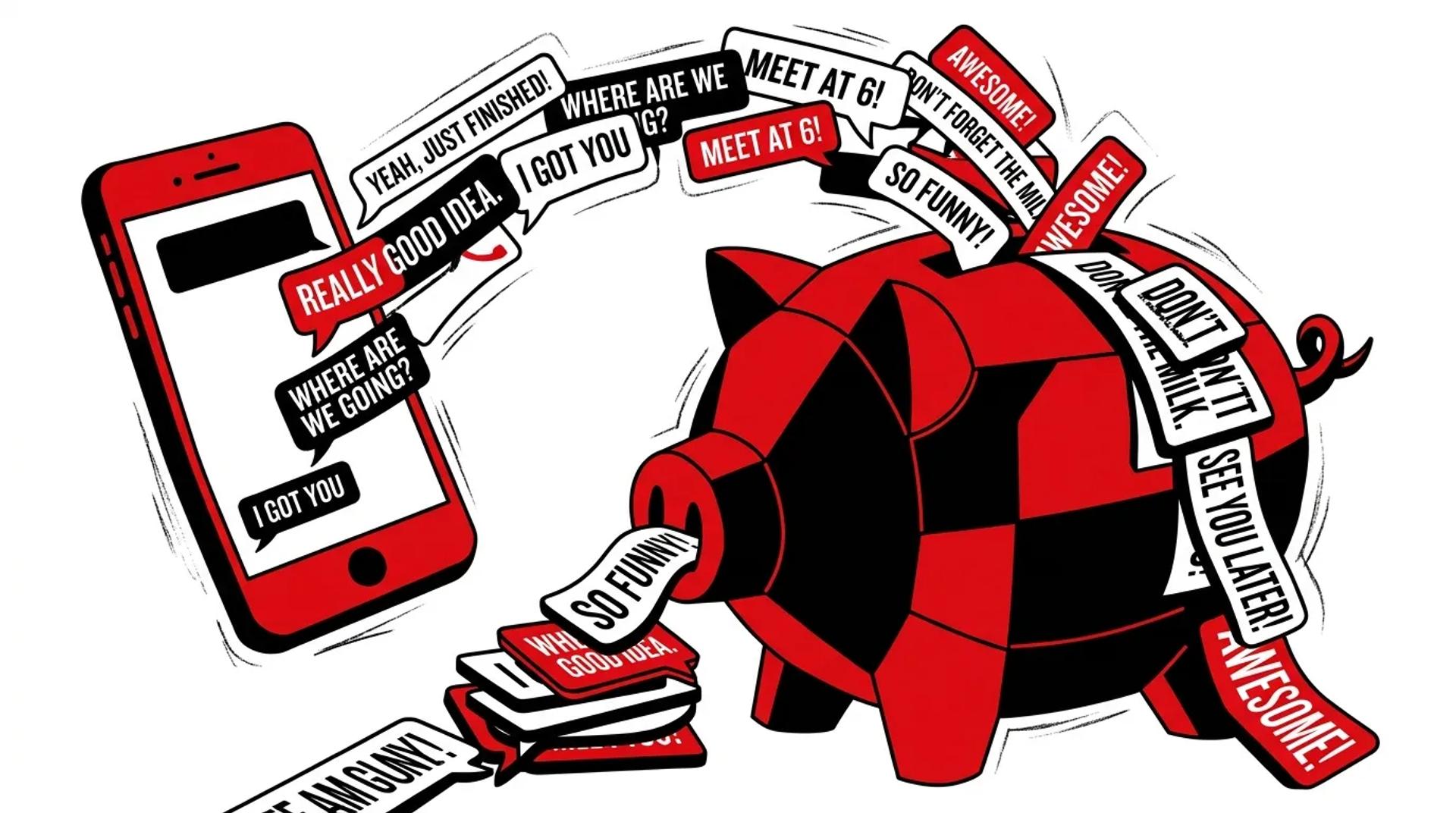

SMS has the highest open rates of any marketing channel. Text messages get read within three minutes on average. Yet most businesses using SMS treat it as a bolt-on rather than a system. A confirmation here, a promo blast there. No structure. No integration with the rest of the funnel. No measurable connection to revenue.
A real SMS marketing strategy turns texting into a revenue channel. It handles lead response, supports sales conversations, nurtures cold leads, retains existing customers, and feeds data back into your CRM so you can actually measure the impact. Most SMS programs fail not because the channel doesn’t work, but because nobody designed the system around it.
If you’re evaluating whether SMS belongs in your marketing stack, the answer is almost always yes. The real question is whether you build it as a system or leave it as a tactic.
What a revenue-driving SMS system actually does
An SMS program built for revenue handles five distinct jobs:
- Instant lead response: A text within two minutes of form submission confirming receipt and providing a next step
- Sales follow-up support: Automated texts that keep the conversation warm between rep touchpoints
- Appointment management: Booking confirmations, reminders, and rescheduling prompts that reduce no-shows
- Retention and re-engagement: Post-service follow-up, review requests, and seasonal offers to past customers
- Two-way conversation: Inbound replies routed to reps or handled by smart automation
When all five functions work together, SMS becomes your fastest path to contact, your best tool for reducing no-shows, and a measurable contributor to booked revenue.
Where most SMS programs fall short
No separation between SMS and email
The most damaging mistake is running SMS like a shorter version of email. SMS vs email marketing serve different purposes at different speeds.
Email is where you educate, nurture, and share detailed content. SMS is where you prompt immediate action. A booking reminder via text is effective. A 500-word nurture sequence via text is not.
| Use Case | Best Channel | Why |
|---|---|---|
| Lead acknowledgment | SMS | Speed. Two minutes vs. two hours |
| Detailed service info | Space for content, links, images | |
| Appointment reminders | SMS | 98% open rate, immediate visibility |
| Nurture sequences | Longer content, lower opt-out risk | |
| Review requests | SMS | Higher response rate than email |
| Re-engagement offers | SMS + Email | SMS for urgency, email for details |
| Educational content | Format supports depth |
No speed-to-lead SMS
SMS lead follow-up is the single highest-ROI use of text messaging. A prospect fills out a form. Within two minutes, they get a text: “Hey [Name], thanks for reaching out. One of our specialists will call you shortly. Reply here if you have questions.”
That text does three things: confirms the lead was received, sets expectations, and opens a two-way channel. Most businesses skip this entirely or send a generic email 30 minutes later. The ones using fast SMS follow-up consistently report higher contact rates and more booked appointments.
Compliance treated as an afterthought
TCPA regulations require explicit opt-in before sending marketing texts. Consent must be documented. Opt-out must be instant. Sending hours are restricted. These aren’t suggestions.
Building compliance into the system from day one is non-negotiable. Retrofitting compliance onto a program that’s been running non-compliant is expensive and risky.
How to structure SMS for revenue
Here’s the framework we use when building an SMS marketing strategy from the ground up:
- Define use cases: Separate lead response, sales support, transactional, and marketing messages
- Build compliance infrastructure: Opt-in capture, consent logging, opt-out handling, quiet hours
- Set up instant lead response: Automated text within two minutes of every inbound lead
- Create appointment flows: Confirmation, reminder (24h and 1h before), and no-show follow-up
- Build two-way routing: Inbound replies go to the assigned rep or a monitored queue
- Coordinate with email: Define which messages go via SMS, which via email, and which use both
- Connect to CRM: Log every SMS send, reply, and opt-out against the contact record
SMS program maturity comparison
| Capability | Basic SMS | Revenue-Driving SMS |
|---|---|---|
| Lead response speed | Manual or delayed | Automated under 2 minutes |
| Compliance | Ad hoc, undocumented | Systematic opt-in, opt-out, quiet hours |
| Message types | Promos and blasts | Lifecycle-triggered, role-specific |
| Two-way handling | Replies go nowhere | Routed to reps, tracked in CRM |
| Email coordination | None | Defined channel roles, no overlap |
| Attribution | None | SMS touches logged and tied to revenue |
What data and integrations matter
SMS doesn’t work in isolation. The channel needs to be connected to your CRM, call tracking, and marketing automation platform.
Essential integrations:
- CRM sync: Every text, reply, and opt-out logged against the contact record
- Form and ad platform connections: Lead data triggers SMS instantly upon submission
- Call tracking: SMS-driven calls get attributed to the right text and campaign
- Scheduling tool: Appointment data feeds SMS reminders and confirmations automatically
Data requirements:
- Validated mobile numbers (not landlines)
- Documented opt-in with timestamp
- Opt-out status synced across all platforms
- Lead source and campaign data for attribution
The goal is a complete SMS marketing strategy where you can say: “SMS-touched leads book at a 35% higher rate than non-SMS leads, and our cost-per-booked-job from SMS follow-up is $X.” That’s measurable ROI.
How Ad Leverage designs SMS systems
We don’t add SMS as an afterthought. We build it as a channel within your lifecycle system. That means defining the role SMS plays at each funnel stage, coordinating it with email and automation, and connecting it to your CRM so every text is trackable.
We handle compliance infrastructure, phone number validation, two-way routing, and CRM integration. Every program we build includes SMS lead follow-up automation that fires within two minutes. The impact on contact rates is immediate and measurable.
We’ve built SMS systems for businesses generating 500+ leads per month. The consistent result: faster contact, higher booking rates, and a new attribution data point that helps optimize the entire marketing mix.
Frequently asked questions
Is SMS worth adding if we already do email well?
Yes. SMS and email serve different roles. Email nurtures. SMS prompts immediate action. Businesses using both channels in a coordinated system consistently outperform those using either channel alone. The SMS vs email marketing debate misses the point. They’re complementary.
What’s a good SMS response rate?
For lead follow-up texts, response rates between 15 and 30% are strong. For appointment reminders, confirmation rates above 60% are typical. Anything significantly below these benchmarks points to messaging, timing, or data quality issues.
How do we handle SMS compliance?
Build it into the infrastructure. Capture explicit opt-in at every lead intake point. Log consent with timestamps. Process opt-outs instantly. Respect quiet hours (typically 8am to 9pm in the recipient’s time zone). Use a platform that enforces these rules automatically.
Can SMS replace phone calls for lead follow-up?
No. SMS supplements calls. The ideal lead response flow is: automated text within two minutes, phone call within five minutes, follow-up email within ten minutes. SMS gets the conversation started. The phone call is where the appointment gets booked.
Ready to turn SMS into a revenue channel?
If SMS is in your stack but not contributing to pipeline, the system needs work. Talk to a CRM & SMS Strategist to get a structured plan for building SMS into your revenue engine.
References
- Twilio, “The State of Messaging Report”
- CTIA, “U.S. Wireless Industry Messaging Trends”
- HubSpot, “SMS Marketing: Best Practices and Benchmarks”