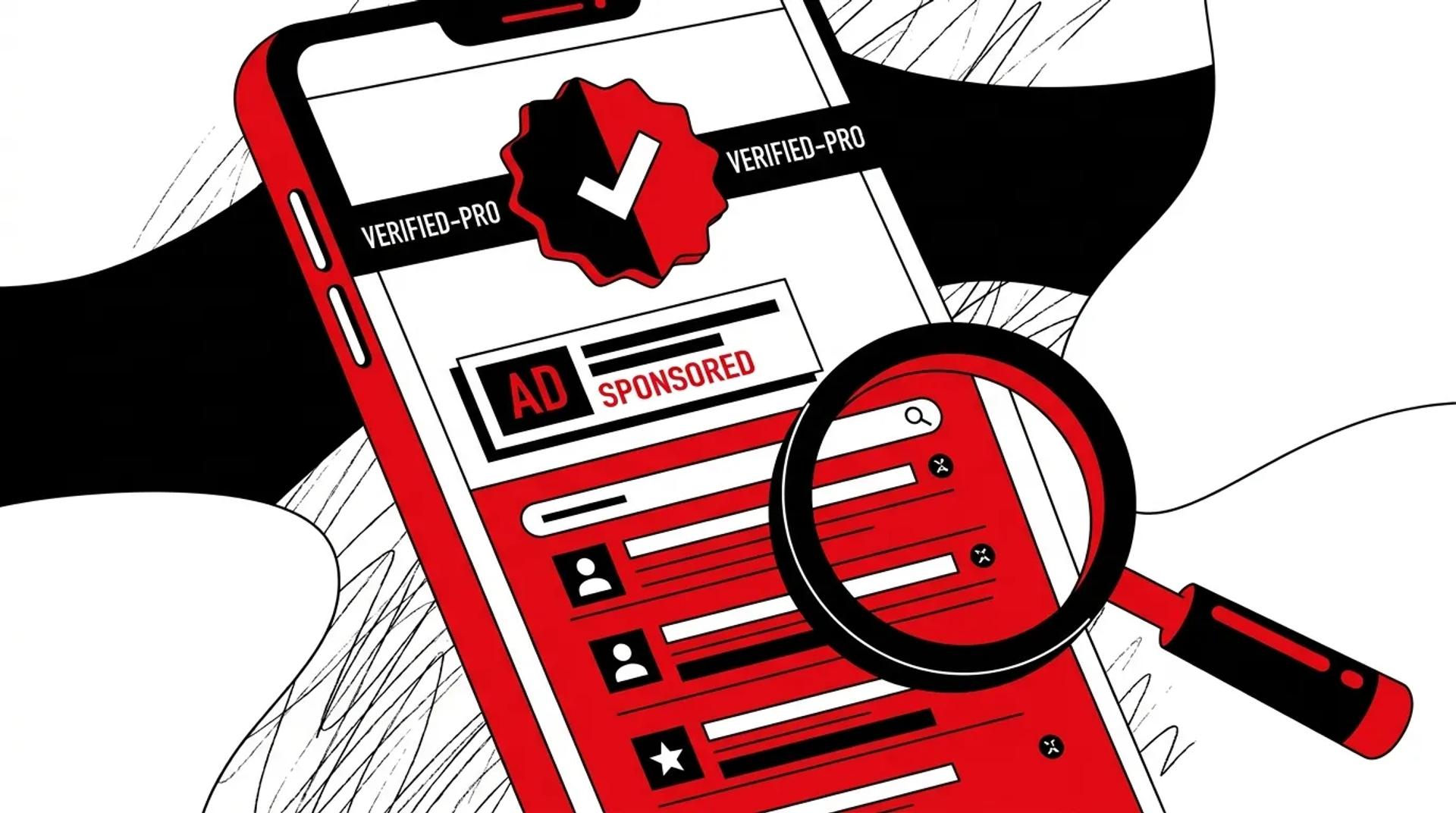

Local Services Ads are not a replacement for Google Ads or SEO. They are a third layer of search visibility that sits above everything else on the results page. The businesses that treat LSAs as their entire strategy end up capping their growth. The ones that integrate LSAs with paid search and organic own more of the SERP and generate more booked jobs per dollar.
A complete Local Services Ads strategy accounts for how LSAs interact with your Google Ads campaigns and your organic presence. Each channel captures different intent, occupies different real estate, and produces leads with different characteristics. Running them in silos means you are making decisions without the full picture.
We manage all three channels for home services and local businesses. The integration is where the real leverage lives. Not in any single channel alone.
Where LSAs sit on the search results page
Understanding SERP layout is the foundation of any Local Services Ads strategy. When someone searches “plumber near me” on mobile, the results page stacks like this.
- Local Services Ads (Google Guaranteed badge, top of page, pay per lead)
- Google Ads Search (standard text ads, pay per click)
- Local Map Pack (Google Business Profile listings, organic)
- Organic Search Results (website pages, organic)
This means a single search query offers four distinct placement opportunities. A business running LSAs, Search ads, and ranking organically can appear three times on the same results page. That kind of coverage dominates competitor visibility and captures clicks regardless of where the searcher’s eyes land.
| SERP Position | Channel | Pricing | Control Level | Trust Signal |
|---|---|---|---|---|
| Position 1 (top) | Local Services Ads | Per lead | Low. Google controls matching | Google Guarantee badge |
| Position 2 | Google Ads Search | Per click | High. Full keyword/ad control | Ad label |
| Position 3 | Map Pack | Free (organic) | Medium. GBP optimization | Star ratings, proximity |
| Position 4 | Organic Results | Free (organic) | Medium. SEO effort required | Domain authority |
The takeaway is clear. Running only one channel means you are invisible in three other places where your competitors are showing up.
How LSAs complement Google Ads
Local Services Ads vs Google Ads is a false choice. They serve different purposes and capture different searcher behaviors.
LSAs are strongest for:
- High-urgency, immediate-need searches (“emergency electrician,” “AC repair now”)
- Mobile searchers who want to tap and call immediately
- First-time customers who trust the Google Guarantee badge
- Simple, transactional services where the buyer does not need much information before calling
Google Ads Search is strongest for:
- Longer consideration services where the searcher needs to visit a landing page
- Targeting specific keywords and negative keywords for lead quality control
- Retargeting and audience layering for multi-touch conversion paths
- Detailed performance data and optimization levers
The overlap between LSAs and Search ads is real but manageable. We typically see 15-25% overlap on high-intent local queries. The remaining 75-85% of leads from each channel are incremental. Both channels produce leads you would not get from the other alone.
How to Manage the Overlap
- Track every lead source through call tracking and CRM tagging
- Compare LSA cost per booked job against Google Ads cost per booked job monthly
- If one channel has significantly worse unit economics, shift budget rather than pausing entirely
- Use Google Ads for the keywords and services where LSAs are not available or competitive
How LSAs complement SEO
SEO and LSAs work together because they occupy different positions on the same results page and require different inputs to perform.
SEO drives visibility through:
- Google Business Profile optimization (Map Pack)
- Website content targeting service and location keywords
- Review velocity and quality
- Technical site health, local citations, and backlinks
LSAs drive visibility through:
- Google Guarantee or Google Screened verification
- Review count and rating on your LSA profile
- Responsiveness to leads (speed to answer, booking rate)
- Budget and proximity to the searcher
Here is what matters. Strong SEO actually improves LSA performance. Google uses some of the same trust signals for both channels. A business with 200 reviews, consistent NAP citations, and a well-optimized GBP will typically rank higher in LSAs than a competitor with thin presence. The investment in SEO compounds across channels.
Which businesses should prioritize LSAs
Not every service business needs LSAs. The channel works best for specific business models.
LSAs are high priority for:
- Home services (HVAC, plumbing, electrical, roofing, pest control)
- Legal services (personal injury, family law, criminal defense)
- Real estate services
- Financial advisors and tax professionals
- Any business where phone calls are the primary lead type
LSAs are lower priority for:
- B2B services where leads come through forms and longer sales cycles
- Businesses without strong Google review profiles (under 4.0 stars or under 20 reviews)
- Service areas that are too broad for local targeting to be effective
- Businesses that cannot respond to leads within 5-10 minutes
If your business fits the high-priority profile, LSAs should be a core part of your Local Services Ads strategy alongside Search and SEO. If you fit the lower-priority profile, invest in Search and SEO first, build your review foundation, then layer in LSAs.
Building a three-channel visibility system
The goal is not just running all three channels. It is running them as an integrated system where each channel’s data informs the others.
Practical integration steps:
- Unified tracking. Every lead from LSAs, Search, and organic should flow into one CRM with channel tagging
- Shared review strategy. Reviews improve LSA ranking, Map Pack ranking, and ad click-through rates. Invest in review generation as a cross-channel asset
- Budget allocation by performance. Compare cost per booked job across all three channels monthly. Shift paid budget toward the channel with the best unit economics
- Keyword intelligence sharing. Search term data from Google Ads reveals what people search. Use that to inform SEO content strategy and LSA service category selection
- Gap analysis. For any target keyword, check whether you have LSA, Search, Map Pack, and organic coverage. Fill the gaps systematically
| Integration Point | What It Does | Impact |
|---|---|---|
| CRM channel tagging | Tracks cost per booked job by source | Enables real budget optimization |
| Unified review strategy | Improves LSA ranking + Map Pack + CTR | Compounds visibility across channels |
| Search term sharing | Informs SEO content from paid data | Faster organic ranking for converting terms |
| SERP coverage audits | Identifies visibility gaps | Maximizes impressions per search query |
Frequently asked questions
Will running LSAs cannibalize my Google Ads leads?
Some overlap is inevitable on high-intent local queries. In our experience, the overlap is 15-25%. The incremental leads from LSAs more than offset the cannibalization. The net result is more total leads at a comparable or lower blended cost per booked job.
Should I pause SEO spending once I have LSAs and Google Ads running?
No. SEO generates leads at zero marginal cost once rankings are established. It also strengthens your LSA and Map Pack performance. Pausing SEO saves budget short term but erodes your competitive position and increases your dependence on paid channels.
How do I know if LSAs are worth it for my business?
Run them for 90 days alongside your existing Google Ads and track cost per booked job. If LSA cost per booked job is within range of your other channels and the leads are incremental, they are worth it. If lead quality is poor or your team cannot handle the response speed requirements, they may not be the right fit.
Can I control which services show up in my LSAs?
You can select service categories, but Google controls the matching. You cannot add keywords or negative keywords like you can in Search. This is why LSAs complement Search rather than replace it. Search gives you the precision that LSAs lack.
Get the full picture on your local visibility
Running LSAs without understanding how they fit with Google Ads and SEO is like optimizing one leg of a relay race. The whole system needs to work together. Request a Local Services Ads Review to see how your LSA performance stacks up against your other channels and where the integration gaps are costing you leads.
References
- Google. About Local Services Ads.
- BrightLocal. Local Consumer Review Survey.
- Moz. Local Search Ranking Factors.